Saturday, June 23, 2018

The Fast and the Furious

Lobby card for The Fast and the Furious

The Fast and the Furious (1954)

"When a Wanted Man - Meets a Wanting Woman!"

Roger Corman's career really took off when he negotiated a three picture deal with the company that would become American International Pictures (AIP). In what is sort of a remake of his first picture Highway Dragnet, Corman wrote and Produced (and Directed the Second Unit - and stunt drove!) in a film about Frank Webster (John Ireland) a truck driver wrongly convicted for murder who kidnaps race car driver Connie Adair (Dorothy Malone) and flees the country in her Jaguar XK120 via an international sports car race that crosses the U.S. / Mexico border.

The film suffers from John Ireland splitting his time behind the wheel and behind the camera, and the hokey romance seems to lack any real chemistry. In fact all the finest performances are by the day players in supporting roles. And while it's true Roger Corman would go on to produce better race car films (including Death Race 2000, and Ron Howard's directorial debut, Grand Theft Auto), The Fast and the Furious is worth seeking out because the story itself (one of only a handful Corman wrote in his prodigious producing career) isn't bad, and the race scenes are some of the best that had ever been filmed up to that time.

The film was remade - no, not as the 2001 Paul Walker / Vin Diesel film that purchased the rights to the title - as a 1994 action-comedy starring Charlie Sheen called The Chase.

**1/2 out of *****

Thursday, June 21, 2018

"Night of the Whirring Death"
Doctor Loveless invents the electric toy train

***1/2

(Feb. 18, 1966)

The twentieth episode of The Wild Wild West was a bit of a Christmas episode (even though it didn't make it to air util February). It shows a definite Dickens influence.

Dr. Loveless (Michael Dunn is back again, along with his assistant Voltaire (Richard Kiel). This time he plans to use toys to take over California and make it a place for children (if only he could see 100 years into the future!).

The episode has some great things to watch for, including in the supporting cast, Norman Fell (Mr. Roper on "Three's Company"), and not one but two babes, Pamela Austin and Barbara Nichols.

Other highlights:

  • anachronism: Loveless invents the electric toy train - then blowing it up Gomez Addams style
  • Artemus undercover as an opera singer in one of the episodes 2 musical numbers
  • tech watch: the wax cylinder gramaphone
  • anachronism: a Raggedy Ann doll about 40 years too early
  • campy fun: Loveless' distinctly modern looking toys

Monday, June 18, 2018

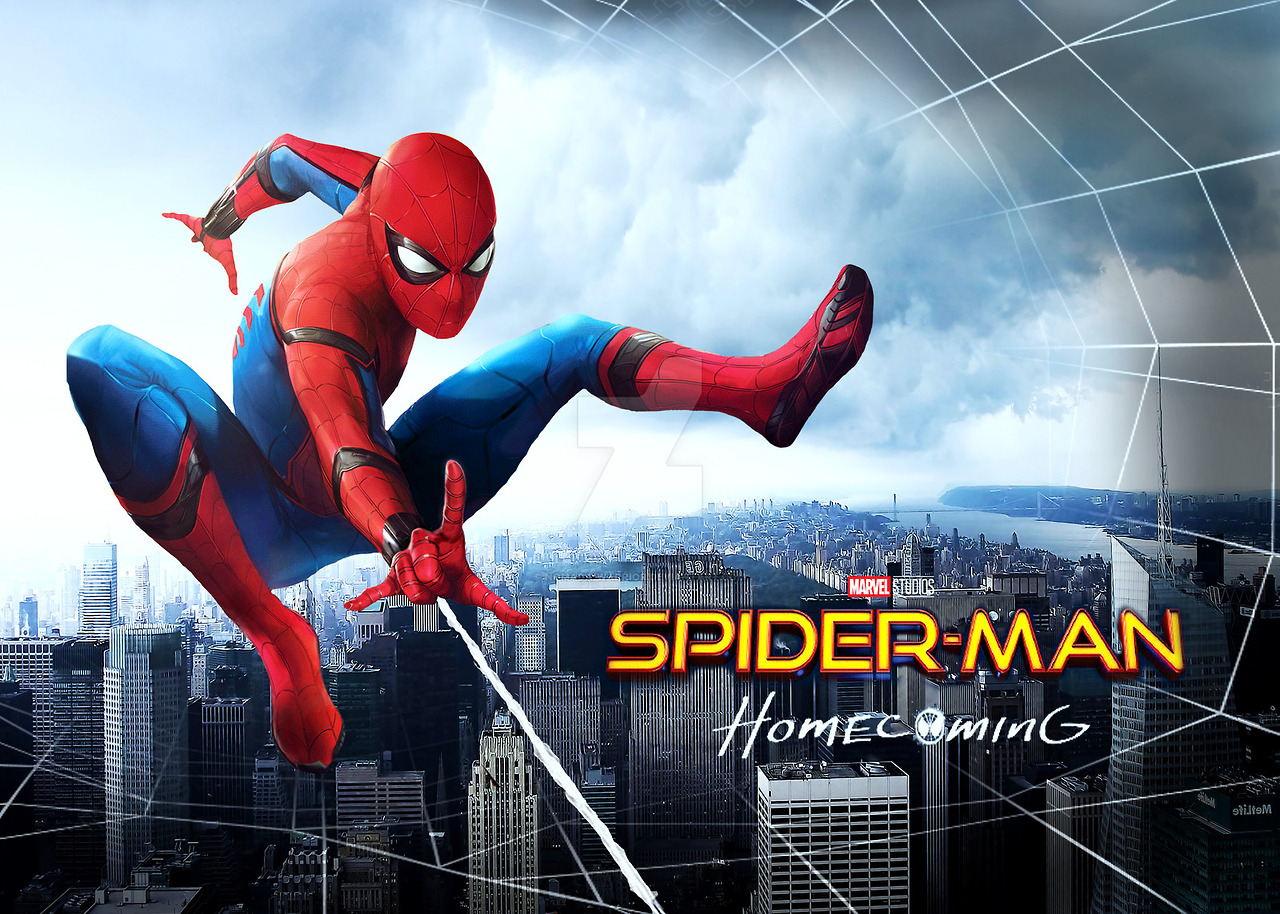
Spider-Man: Homecoming

Finally a Spider-Man film that isn't a reboot

Spider-Man: Homecoming

The title Spider-Man: Homecoming is a bit of a double entendre. The plot involves the Spider-man's alter ego, Peter Parker attending his school's homecoming dance - but it's also a meta reference to the character, long the property of licensees (Columbia, and SONY) finally coming home to Marvel Studios to be integrated into the Marvel Cinematic Universe (MCU). While the first two Spider-Man films, by low-brow auteur Sam Raimi, remain among the best superhero films ever made, the series stumbled on the third installment, and a hasty reboot and sequel (complete with Jamie Foxx playing a cringe-worthy villain reminiscent of Richard Pryor in Superman III) continued the downward spiral. SONY maintained a tight rein on the character, and wasn't going to let go, no matter how many times it flopped at the box office. But then came the SONY email hack, and when the dust settled, the way was paved for a joint venture Spider-Man film that would satisfy both studios.

Without creating another superfluous reboot, The Spider-Man Homecoming quietly "resets" Peter Parker's age to 15 and picks up the story sometime early in his crime-fighting career. And once again we have a truer-to-the-comics Peter who has to juggle school, dating, and web-slinging. And wouldn't you know, his biggest challenge

But the real highlight here is Michael Keaton as the antagonist, The Vulture. At first it might seem a little disappointing to see a healthy looking Keaton playing one of the few scrawny, elderly supervillains in the comics, but the reimagining is so worth it. Standing in what is undeniably a parallel to the post 9/11 Ground Zero site, Keaton is completely believable, and sympathetic even, as a NYC demolitions worker whose company is nearly bankrupted by corrupt government over-reach. He retools his demolitions company into a purveyor of destructive implements made from salvaged alien Kree technology, saving the best - a set of flying robotic wings - for himself.

If that reminds you of Keaton's recent appearance as Birdman, you're probably not alone. In another meta-twist, there seems to be a distinct reference to Keaton's Batman in Birdman, and to Keaton's Birdman in his portrayal of Vulture.

Spider-Man: Homecoming, feels like a homecoming in another way too. While all of the previous Spider-Man films also take place in NYC, this one feels the most authentically New York-ish. There really isn't the kind of rampant crime that existed in the city at the time the comic was originally created, and Peter discovers this as he tries to patrol for crime, only to discover nothing worse than bicycle theft. Previous films featured such recognizable locations as Times Square, The Flatiron Building, and The Brooklyn Bridge, this film features, in addition to the aforementioned fictional destruction site that resembles Ground Zero, the Staten Island Ferry, and locations in other boroughs like Brooklyn and especially Forest Hills, Queens, home of Peter Parker and Aunt May. In a perfect pairing of music to location the film uses music from The Ramones, a band actually from Forest Hills that has long been associated with comic books, and Spider-Man in particular (why didn't anyone think of this before?) Though the filmmakers must be excused for using "Blitzkrieg Bop" rather than The Ramones excellent cover of the "Spider-Man Theme Song" instead.

**** out of *****

Saturday, June 16, 2018

Marvel's Agents of S.H.I.E.L.D. Season 4; Agents of Hydra

Agents of Hydra was the third and final story arc of Season 4

 Agents of S.H.I.E.L.D. Season 4; Agents of Hydra

Final story arc of season 4 does not disappoint

Do you remember the Star Trek episode, Mirror Mirror? The writers of Marvel's Agents of S.H.I.E.L.D. do. In that episode, the crew visit a parallel universe where they meet the evil versions of themselves. That's exactly what happens in the third and final major story arc of season 4, "Agents of Hydra". This is familiar territory for Marvel, while it was D.C. Comics that first added the concept of parallel worlds to the pop culture landscape with the now infamous "Flash of Two Worlds" storyline, it was Marvel that ran with it in a regular comic called What if..? that explored alternate versions of it's heroes and villains. In tribute to that monthly comic that ran from 1977-1984, the first episode of this story arc is named, appropriately, "What if...".

Following on the heels of the "LMD" story arc, AIDA has captured most of the S.H.I.E.L.D. agents, and has them unconscious, living in a virtual world connected directly to their brains. It's up to Quake and Simmons to enter the Framework - think The Matrix - and find some red pill to snap them out of it. There they find a Neo-Nazi America (shades of another Star Trek episode), ruled by AIDA and a Josef Mengle-esque Fitz.

Like the arc where Simmons was on another planet, this arc is shot with a limited color palette and also tends to get a little relentlessly dark toward the middle. But at times it's also a very incisive commentary on the state of America today. And if that's not enough, it also features some great acting by all the primary cast members in twists on their usual characters.

***1/2 out of *****

Wednesday, June 13, 2018

Jonah Hex "Night of the White Lotus"

Mei Ling returns to the series

Jonah Hex: "Night of the White Lotus"

After taking their infant son and leaving back in issue No. 53, Jonah Hex's wife Mei Ling was been absent from the series for several issues. But as evidenced by this issue, neither has been far from the others' mind.

When Jonah encounters a strange Chinese visitor from Nanking named Wu Song Phat, however, the stage seems to be set for some adventure that will reunite them.

"Night of the White Lotus" isn't particularly notable as the series goes, but as the setup of an arc that deals with the long running Jonah / Mei Ling relationship, it's pretty important to Jonah's character arc.

The backup El Diablo story, "The Hypnotist and the Devil" reads like something out of the Silver Age Weird Western stories in that supernatural powers are all-powerful and every bad guy gets his comeuppance. Think of an early Spectre story set in the Old West and you have a pretty good idea of what it's like.
**1/2 out of *****

Tuesday, June 12, 2018

Marvel's Agents of S.H.I.E.L.D.: LMD

Agents of S.H.I.E.L.D.: LMD is the second major story arc of Season 4

Agents of S.H.I.E.L.D.: LMD


In Season 4, the best season of Marvel's Agents of S.H.I.E.L.D. to this point follows up the excellent "Ghost Rider" story line,  with "LMD" which switches gears from the supernatural to the high-tech. Despite Agent MacKenzie's dire predictions that any attempt to create autonomous androids inevitably leads to a robot uprising, Fitz nevertheless assists Dr. Radcliffe in developing them. As predicted, the First Law of Robotics pretty much goes out the window fast.

While the Marvel Cinematic Universe has touched on some robot and android related issues, particularly with Ultron and Vision, "LMD" takes advantage of the longer form TV medium to go deeper.

LMD stands for "Life Model Decoy", androids that have been part of the S.H.I.E.L.D. comics since the mid-1960s, and it's interesting to see their long-awaited integration into the show. While we experienced something similar in past seasons with the face-changing mask, now the show goes whole hog with the Invasion of the Bodysnatchers, who-can-you-trust situations.

All-in-all, one of the series' better story arcs.

**** out of *****

Saturday, June 2, 2018

Agents of S.H.I.E.L.D. Season 4; Ghost Rider

Ghost Rider appears in Season 4 of Agents of S.H.I.E.L.D.

Agents of S.H.I.E.L.D. Season 4; "Ghost Rider"

Ghost Rider rides again in Season four's first major story arc

When last we left the Ghost Rider saga, Johnny Blaze rode off into the Turkish sunset after saving a young boy. Now he has reappeared in Los Angeles where he's possessed Robbie Reyes, a young latino who drives a supercharged '69 Dodge Charger (why doesn't Ghost Rider ever possess some random dude who drives a beat up old Ford Taurus?).

Normally I hate reboots where the main character is drastically changed, but I am O.K. when it's with characters like Green Lantern, or Ghost Rider, which are really just offices held by different people. So I didn't mind Marvel's obvious attempt to bring diversity to its roster and court the massively growing Latin-American segment of the populace, but I have to admit to being more than a little surprised and pleased to see him popping up in Marvel's Agents of S.H.I.E.L.D.

The Ghost Rider story arc comprises the first 9 episodes of Season 4. Up to this point the supernatural in the on screen Marvel Universe has been comprised of the Jack Kirby, Asgardian, is-it-really-magic-or-is-it-science-so-advanced-it-seems-like-magic variety. With the release of the film Doctor Strange, magic proper is introduced, and in the Ghost Rider arc, the infamous Darkhold from the comics appears. But Marvel's Agents of S.H.I.E.L.D. dials it back a bit, keeping it still a bit ambiguous - is it really magic, or is it inter-dimensional travel. Although, as Coulson puts it at one point when talking to Fitz:

Coulson: He claims he made a deal with the devil.
Fitz: Which is nonsense.
Coulson: You know, the rationalist in me wants to agree, but the skull on fire makes a pretty compelling argument for "Hail Satan".

The Ghost Rider story arc represents a welcome change of pace for the series. Frankly, the Human vs. Inhuman storyline was starting to wear pretty thin, especially since the X-Men films and the Heroes TV shows already explored the concept pretty extensively. It also takes this show into really high end superpower territory (really, can Ghost Rider even be killed?), but fortunately the showrunners have wisely chosen to make this a complete arc in only a third of the season rather than stretch it to a full 24 episodes.

***1/2 / *****

The Eyes of My Mother

When Self-Isolation Leads to Horror The most common horror movie tropes deal with supernatural evil, or sometimes a horror brought about ...